Research compound, not FDA-approved
The human trials for TB-500 tested a different molecule
Thymosin beta-4 is a 43-amino-acid protein with 15 registered clinical trials behind it. TB-500 is a 7-amino-acid fragment of it, and FDA reports no human exposure data for the fragment at all. Every study on this site names the molecule that was actually administered, and the species it was given to.
- 2,143people enrolled in registered trials of the full 43-amino-acid protein
- 0published human studies of the fragment that is actually in the vial
- 26studies and registry records in our graded evidence table, each labelled by molecule and species
- 11of those tested the TB-500 fragment; 10 of the 11 are animal, cell or product analyses
- 55fetch-verified sources: 29 peer-reviewed, 26 government, registry or anti-doping authority

Online care, from intake to delivery
Available TB-500 blend care
Choose your plan, complete a private medical intake, and connect with a licensed provider. If prescribed, treatment ships discreetly to your door.
Your care plan includes
Everything you need to get started
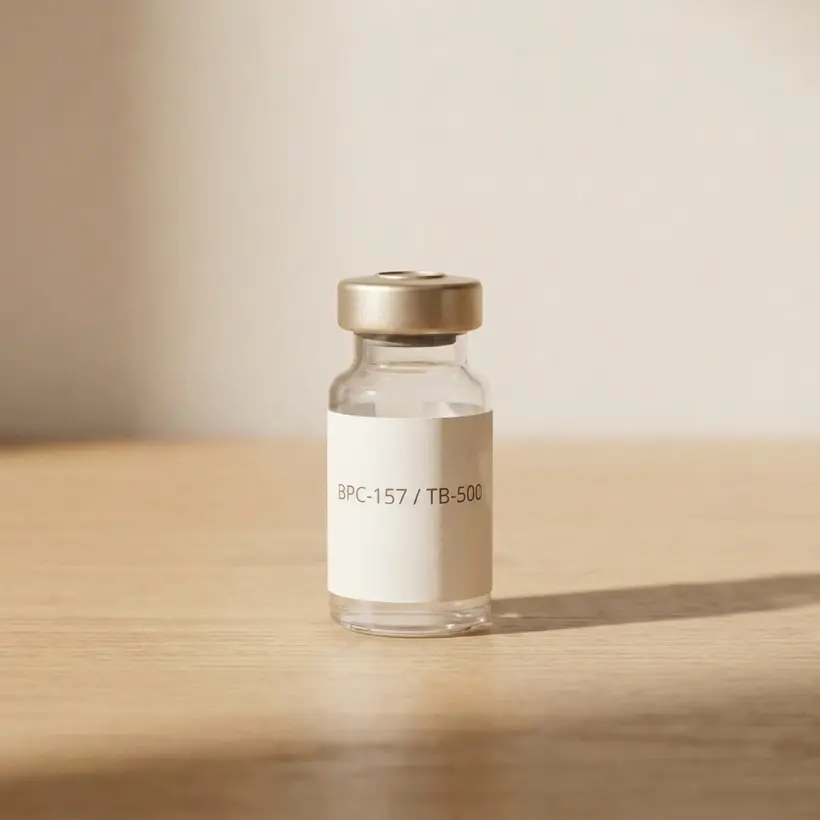
Important: Standalone TB-500 is not sold through this checkout. The available option is a BPC-157 / TB-500 blend.
Encrypted checkout • provider review required • shipping included
- 01Choose your planSelect the supply and refill preference that works for you.
- 02Complete your intakeShare your health history in our private, secure flow.
- 03Provider reviewIf appropriate, your prescription is prepared and shipped.
Prescription treatment requires an online medical evaluation. A provider will determine whether treatment is medically appropriate; approval is not guaranteed.
Key facts
- StatusResearch compound, not FDA-approved
- Human PK of the fragmentNone published
- Human half-life of the fragmentNever measured
- Human bioavailability of the fragmentNever measured by any route
- Rat metabolismAc-LK primary metabolite at 0-6 h; Ac-LKK detectable to 72 h
- Active moiety in questionOnly the metabolite Ac-LKKTE showed significant wound-repair activity, not the parent peptide
- Equine detectionParent and Ac-LK confirmed in plasma and urine after a single 10 mg subcutaneous dose; limits about 0.01 to 0.02 ng/mL
- Surface adsorptionTB-500 is a published model peptide for loss to glassware and plasticware; stated concentration is not always delivered concentration
- Human PK of the full protein (different molecule)Dose-proportional exposure with half-life increasing with dose, at 42 to 1260 mg IV
- ClassSynthetic 7-amino-acid peptide; the acetylated actin-binding fragment (residues 17-23) of thymosin beta-4
- SequenceAc-LKKTETQ (Ac-Leu-Lys-Lys-Thr-Glu-Thr-Gln)
- Molecular weight889.0 Da (C38H68N10O14), CAS 885340-08-9
- Parent proteinThymosin beta-4: 43 amino acids, 4963 Da. A different molecule, about 5.6 times the mass
- FDA human exposure dataNone identified by FDA for the fragment
- July 2026 PCACFDA proposed that TB-500 free base and TB-500 acetate NOT be added to the 503A compounding list
- WADA 2026Named under S2.3 as thymosin beta-4 and its derivatives; prohibited at all times; non-Specified Substance
- Published human studies of the fragment0. One phase 1/2 safety study is recruiting with no results posted
- Participants in registered trials of the full protein2,143 across 15 completed or terminated trials
- Human pharmacokinetics of the fragmentNone published; no half-life, bioavailability or clearance measured in a person
- Animal metabolismIn rats, Ac-LK dominates at 0-6 h; Ac-LKK detectable to 72 h; only the metabolite Ac-LKKTE showed wound-repair activity
- Best-documented in vivo dose10 mg subcutaneously, in horses, administered by racing laboratories to build detection tests
- Established human doseNone. No human dose-finding study has been published
- Product contentAnalysis of marketed TB500 and TB1000 found content not systematically consistent with its descriptions
Browse by topic
Everything on TB-500, organised the way you research it.
Free TB-500 tools
Practical calculators and references, each scoped and sourced.
All guides
50 in-depth, individually cited guides.
Comparisons 12 guides
Evidence 10 guides
Dosing 10 guides
Safety 9 guides
Sourcing 9 guides
Follow the TB-500 record as it changes
One short email when something real happens: results from the first human trial of the fragment, FDA rulemaking on the compounding proposal, a new WADA list, or the first published human study. Every item cited to its primary source.